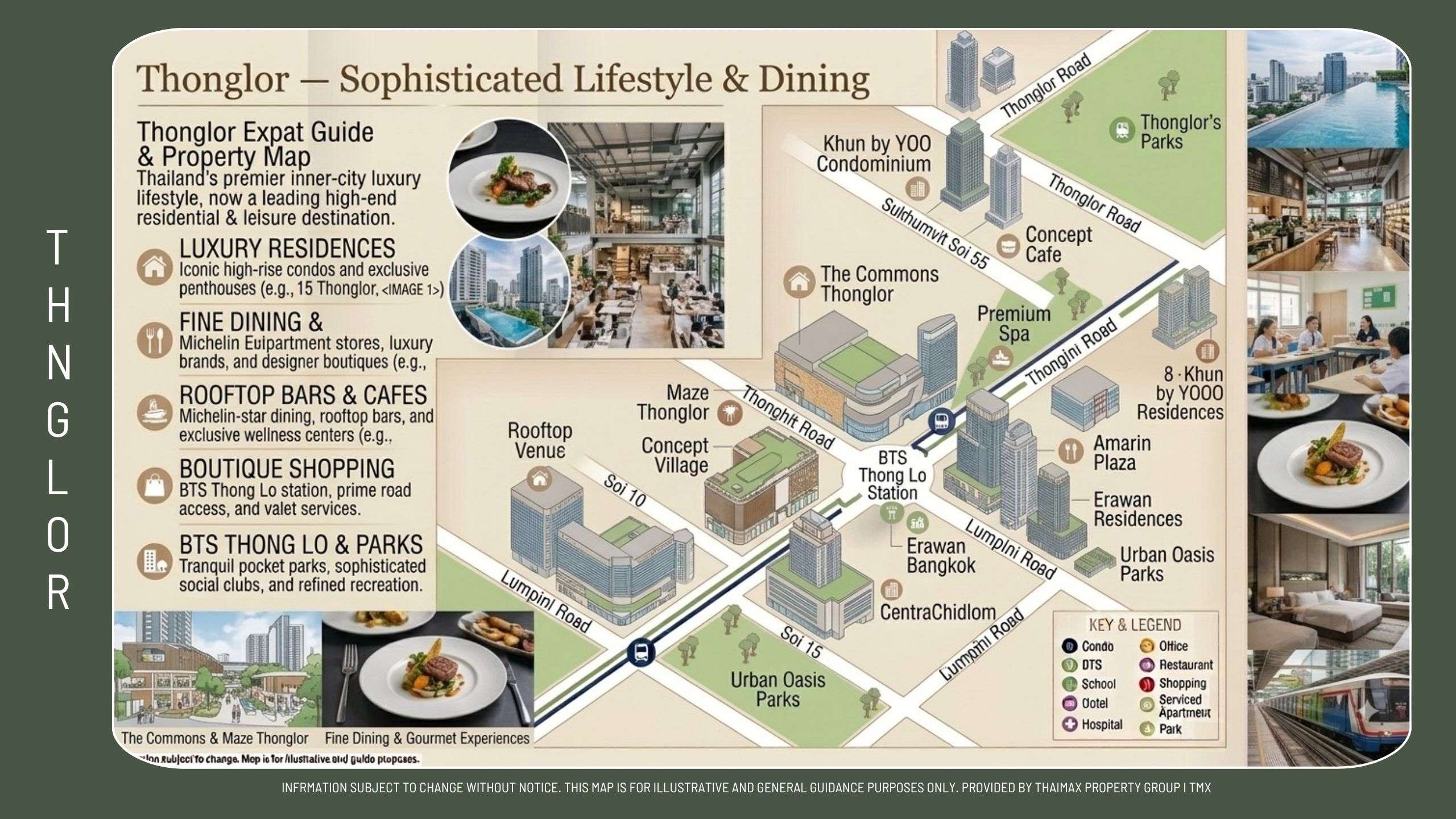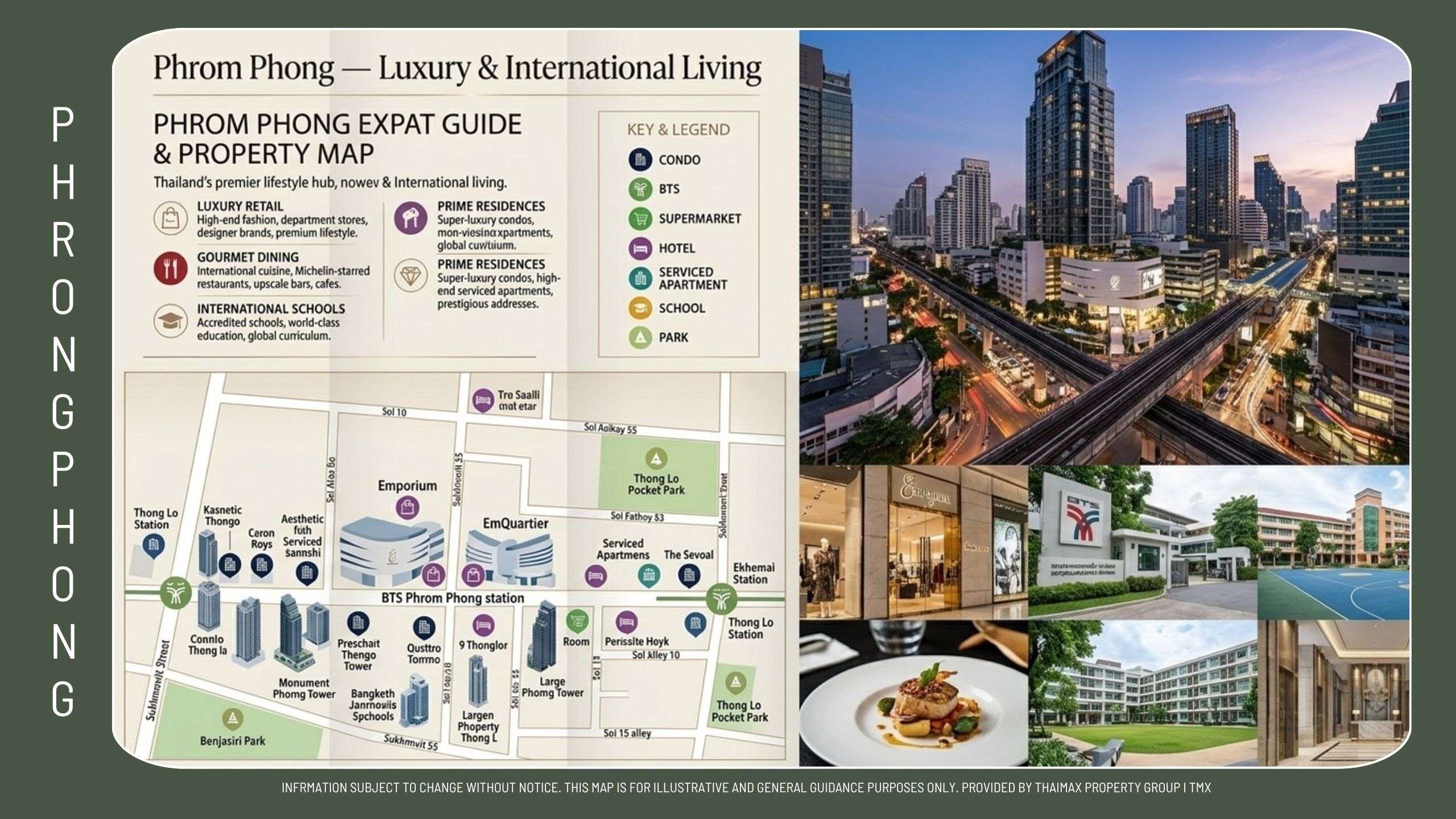

BANGKOK EAST EMERGES AS A NEW GROWTH CORRIDOR
Bangkok’s next major growth story may be developing beyond the traditional CBD.
For decades, the city’s prime real estate narrative has been dominated by Sukhumvit, Sathorn, Silom and the central business districts. In 2026, however, attention is increasingly shifting eastward — toward Bang Na, Bang Na–Trat, Suvarnabhumi and the wider eastern metropolitan corridor.
What makes Bangkok East particularly compelling is not simply the availability of land. It is the convergence of infrastructure, business expansion, international connectivity, large-scale mixed-use development and access to the Eastern Economic Corridor (EEC).
The result is a corridor that is increasingly evolving from a peripheral residential location into an important extension of Bangkok’s economic and lifestyle network.
FROM SUBURB TO STRATEGIC CORRIDOR
Bang Na has traditionally been viewed as a convenient gateway between Bangkok and the eastern provinces. That perception is changing.
The Bang Na–Trat corridor is increasingly being positioned as a future eastern business and lifestyle district, supported by major infrastructure and private-sector investment. The draft Bangkok Comprehensive Plan identifies the area as a potential New CBD, while planned transport connections are expected to strengthen its relationship with Suvarnabhumi Airport and the wider eastern economic corridor.
This creates an important shift in the investment narrative.
Bangkok East is no longer simply about living outside the city centre.
It is increasingly about being connected to where the city is expanding next.
THE INFRASTRUCTURE EFFECT
Real estate growth rarely happens in isolation. It tends to follow infrastructure, employment and investment.
Bang Na benefits from an increasingly integrated transportation network, including existing expressways, major arterial roads and mass-transit connections, while future rail development is expected to further strengthen connectivity through the eastern corridor toward Suvarnabhumi Airport.
For property investors, infrastructure matters because it can expand the practical boundaries of a city.
As commuting becomes easier and business activity decentralises, locations that were previously considered secondary can become increasingly relevant to both residents and companies.
This is one of the reasons Bangkok East deserves closer attention in 2026.
A NEW CONNECTION BETWEEN BANGKOK AND THE EEC
Perhaps the most significant long-term factor is Bangkok East’s position between central Bangkok, Suvarnabhumi Airport and the Eastern Economic Corridor.
The EEC continues to be supported by a long-term infrastructure and investment strategy designed to strengthen Thailand’s position as a regional economic and industrial hub. The official EEC development plan targets substantial investment through 2027 and focuses on improving connectivity between economic zones, infrastructure and digital systems.
For Bangkok East, this creates a strategic geographic advantage.
The corridor sits close enough to Bangkok to benefit from the capital’s economic strength, while also providing direct access toward the industrial and logistics centres of Thailand’s eastern seaboard.
That positioning can be particularly attractive for businesses, executives, expatriates and investors looking beyond traditional CBD locations.
THE MEGA-PROJECT EFFECT
Large-scale developments are also reshaping the perception of Bangkok East.
The emergence of major mixed-use destinations, retail developments, offices, logistics facilities and residential projects is creating a more complete urban ecosystem around Bang Na.
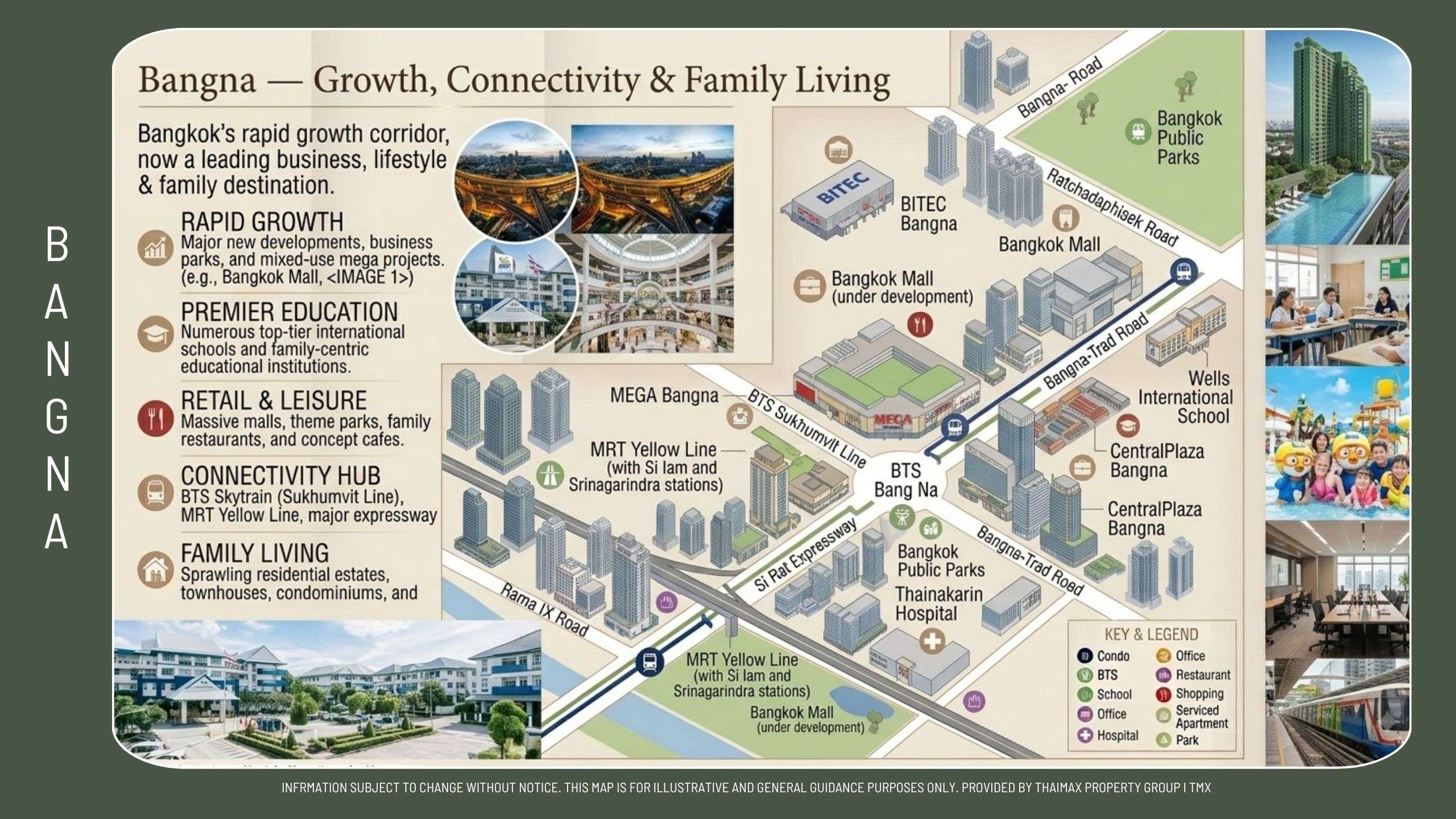
Bangkok Mall is one of the most significant anchors in this transformation. The large-scale mixed-use development at Bang Na Intersection is expected to strengthen the area’s retail, entertainment and lifestyle positioning and contribute to the emergence of a more comprehensive eastern urban centre.
The significance of projects like these extends beyond the individual development.
When multiple large investments begin to cluster within the same corridor, they can create a network effect — attracting businesses, consumers, residents and additional investment.
RESIDENTIAL DEMAND IS EVOLVING
The residential story is also becoming more sophisticated.
Bang Na is increasingly attracting higher-income buyers who want larger residences, better facilities and access to international schools while remaining connected to Bangkok’s business districts and Suvarnabhumi Airport.
Recent market reporting indicates that the eastern Bangkok residential market has shown greater resilience than some other segments of the capital, with the eastern zone accounting for nearly half of Bangkok’s total project value and property transfers in the cited REIC data. Bang Na has also increasingly been positioned as an extended business district rather than simply a suburban residential market.
This is particularly relevant to the luxury low-rise and family residential segment, where buyers often prioritise space, privacy, international schools, accessibility and long-term lifestyle value.
THE OPPORTUNITY IS NOT ONLY RESIDENTIAL
One of the most interesting aspects of Bangkok East is the diversity of real estate demand emerging across the corridor.
The opportunity extends across:
- Luxury residential
- Family-oriented housing
- International-school communities
- Mixed-use developments
- Grade-A offices
- Industrial & logistics property
- Digital infrastructure and data centres
This diversification can make the corridor more resilient because its growth is not dependent on a single property segment.
The same infrastructure that supports residential development can also support offices, logistics, technology and industrial investment.
WHY INVESTORS ARE WATCHING BANGKOK EAST
For investors, the attraction of Bangkok East lies in the combination of growth potential and strategic positioning.
The strongest investment thesis is not simply that land is cheaper than in central Bangkok.
It is that the corridor is gaining infrastructure, investment and economic relevance while still offering opportunities that may be difficult to find in the most established CBD locations.
Key factors include:
Connectivity — access to Bangkok, Suvarnabhumi Airport and the eastern economic corridor.
Infrastructure — existing and planned transportation improvements supporting long-term accessibility.
Economic Expansion — proximity to major business, industrial and logistics activity.
Large-Scale Investment — mixed-use, retail, residential and infrastructure projects reshaping the area.
Land Potential — greater availability for large-scale development than in Bangkok’s traditional CBD.
Lifestyle Evolution — growing access to international schools, retail, hospitality and premium amenities.
A DIFFERENT KIND OF PRIME
The definition of a prime location is changing.
Previously, being close to the traditional CBD was often enough to define prime residential real estate. Today, investors are increasingly considering connectivity, future infrastructure, economic growth and the quality of the surrounding ecosystem.
This creates a new category of opportunity:
Emerging Prime.
Bangkok East may not yet carry the same historical prestige as Sukhumvit or Wireless Road, but its strategic position and expanding infrastructure are creating the conditions for a new generation of prime real estate.
THE INVESTMENT PERSPECTIVE
Bangkok East should not be viewed simply as a cheaper alternative to central Bangkok.
Its more compelling story is that of a growth corridor connecting Bangkok with the future economic geography of Thailand.
As infrastructure expands, major developments mature and economic activity continues moving eastward, locations such as Bang Na and the surrounding eastern corridor could become increasingly important to the city’s next phase of growth.
For investors, the opportunity lies in identifying the locations that benefit before the transformation is fully reflected in pricing — while carefully evaluating infrastructure timelines, project quality, developer fundamentals and actual demand.
Because the most valuable investment opportunity is often not found where the city is today.
It is found where the city is going next.
THAIMAX PROPERTY GROUP
Bangkok Real Estate | Luxury Residences | Investment Opportunities | Bangkok East

![Illustrated Rama 9 map showing roads, buildings, and zones with a legend and side photos for context (expat guide focus).","Informational map of Rama 9 district highlighting transportation routes, landmarks, and property areas with accompanying images.","Bangkok Rama 9 area map detailing roads, towers, parks, and key districts for expats and readers."]} } Adjust to proper JSON without extra spaces? We must output valid JSON as per format. The content above has extra braces. Let's correct. The required top: {](https://thaimaxproperty.com/wp-content/uploads/2026/08/TMX-rama9-detail-info.jpg)