
Long-Term Stay in Thailand: Which Visa Fits Your Plans?
Thailand offers several pathways for foreigners who want to stay beyond a short holiday. The right option depends on why you want to stay, how long you plan to remain, whether you intend to work, your age and financial circumstances, and whether Thailand is becoming your long-term home. The official Thai e-Visa system currently includes retirement, work and business, family, Smart Visa, Long-Term Resident Visa, Destination Thailand Visa and Thailand Privilege among its available categories.
START WITH YOUR PURPOSE
The most important question is not simply how long you want to stay.
It is why you want to stay.
A professional moving to Bangkok for employment will have different requirements from a retiree looking for a long-term lifestyle, a remote worker working internationally, or a high-net-worth individual seeking a more permanent base.
Choosing the visa around your actual circumstances can make the relocation process significantly easier.
Your lifestyle comes first. Your visa should support it.
DESTINATION THAILAND VISA — FOR FLEXIBLE LONG STAYS
The Destination Thailand Visa (DTV) is designed around workcation and certain Thai soft-power-related activities. It is particularly relevant to eligible remote workers, freelancers and people participating in qualifying activities in Thailand.
For someone who wants to spend extended periods in Thailand without following a traditional employment route, the DTV may provide a more suitable framework than repeatedly relying on short-term stays.
The key is confirming that your work and personal circumstances meet the current eligibility requirements.
LONG-TERM RESIDENT VISA — FOR QUALIFYING HIGH-VALUE RESIDENTS
The Long-Term Resident (LTR) Visa is designed for qualifying long-term residents and includes categories aimed at groups such as wealthy individuals, pensioners, highly skilled professionals and other eligible applicants.
The official Thai e-Visa system describes the LTR as a 10-year visa for long-term residents.
For people who meet the criteria, the LTR can be particularly attractive for those planning a more structured and long-term life in Thailand.
For the right applicant, stability becomes part of the lifestyle.
RETIREMENT — FOR A DIFFERENT STAGE OF LIFE
Thailand remains a popular destination for retirees looking for a combination of lifestyle, healthcare, climate, services and relatively diverse housing options.
Retirement-related visa routes are available for eligible foreigners, including the Non-Immigrant O-A long-stay route. Thai consular information identifies the O-A category as a long-stay visa for eligible applicants, with specific application and supporting-document requirements.
For retirees, however, visa planning should go together with decisions about healthcare, insurance, housing, banking and everyday living costs.
WORK & BUSINESS — WHEN THAILAND IS YOUR WORK BASE
Foreigners moving to Thailand for employment or qualifying business activities need to consider the appropriate work or business visa route.
The Non-Immigrant B category is commonly associated with employment and business activities, with extensions potentially available in Thailand depending on the circumstances and approval of the relevant authorities.
For professionals relocating to Bangkok, immigration status and work authorisation should be considered together.
A visa to enter Thailand does not automatically give you permission to work.
FAMILY & DEPENDANTS
For those moving to Thailand with a spouse, children or other qualifying family members, family-related visa categories may be relevant.
This can be particularly important for international families relocating together, as each family member may have different documentation and eligibility requirements.
The relocation plan should therefore consider the entire household rather than treating the main applicant’s visa separately from the family’s needs.
SMART VISA — FOR QUALIFYING PROFESSIONALS & INVESTORS
Thailand’s Smart Visa programme is another option for qualifying talent, investors, executives, entrepreneurs and startup-related applicants.
The programme is designed around specific economic sectors and eligibility criteria, meaning it is not a general long-stay visa for everyone.
For eligible professionals, however, it can provide a pathway that aligns immigration status with their professional activity in Thailand. The official Thai e-Visa system continues to list Smart Visa categories covering talent, investors, executives and startups.
THAILAND PRIVILEGE — LONG-TERM LIFESTYLE
For individuals who prioritise convenience and lifestyle services, Thailand Privilege provides a different approach to long-term residence.
Rather than being based primarily on employment, retirement or professional qualifications, the programme is positioned around long-term membership and associated privileges.
It can therefore appeal to people who want Thailand to function as a long-term lifestyle base and prefer a membership-based solution.
YOUR VISA & YOUR PROPERTY PLAN
Visa planning and property planning often go hand in hand.
Someone staying for several months may prefer a furnished rental. A family planning to remain for many years may want a larger residence close to an international school. A long-term investor may have completely different priorities.
This is why expats should consider visa duration, neighbourhood, rental costs, property ownership, schools, transportation and lifestyle together.
The right property depends partly on how you plan to live in Thailand.
BANGKOK FOR LONG-TERM RESIDENTS
Bangkok remains particularly attractive for long-term international residents because it offers an unusually broad combination of international schools, private hospitals, corporate employment, shopping, dining, entertainment and public transportation.
Neighbourhood choice then becomes a lifestyle decision.
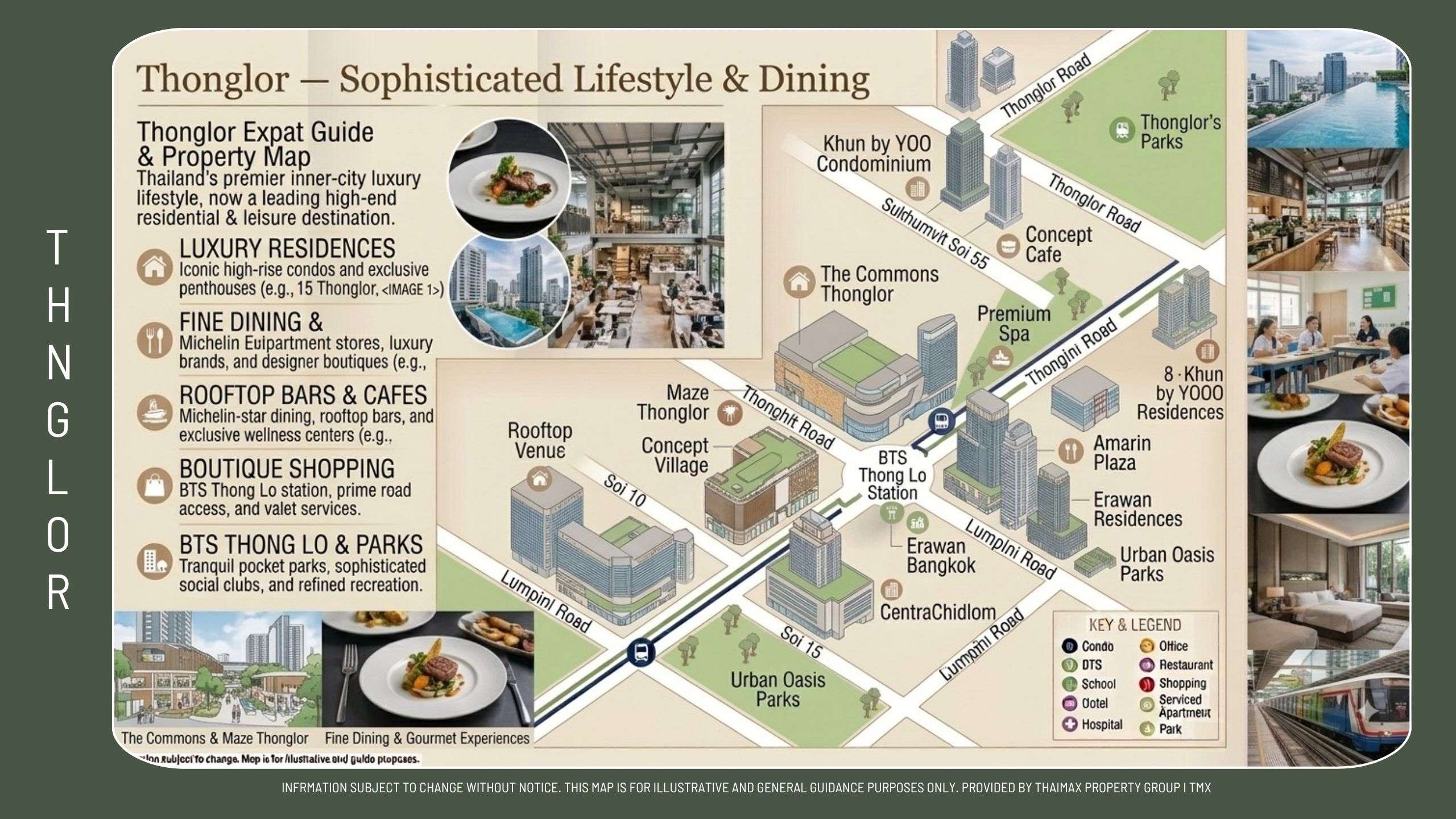
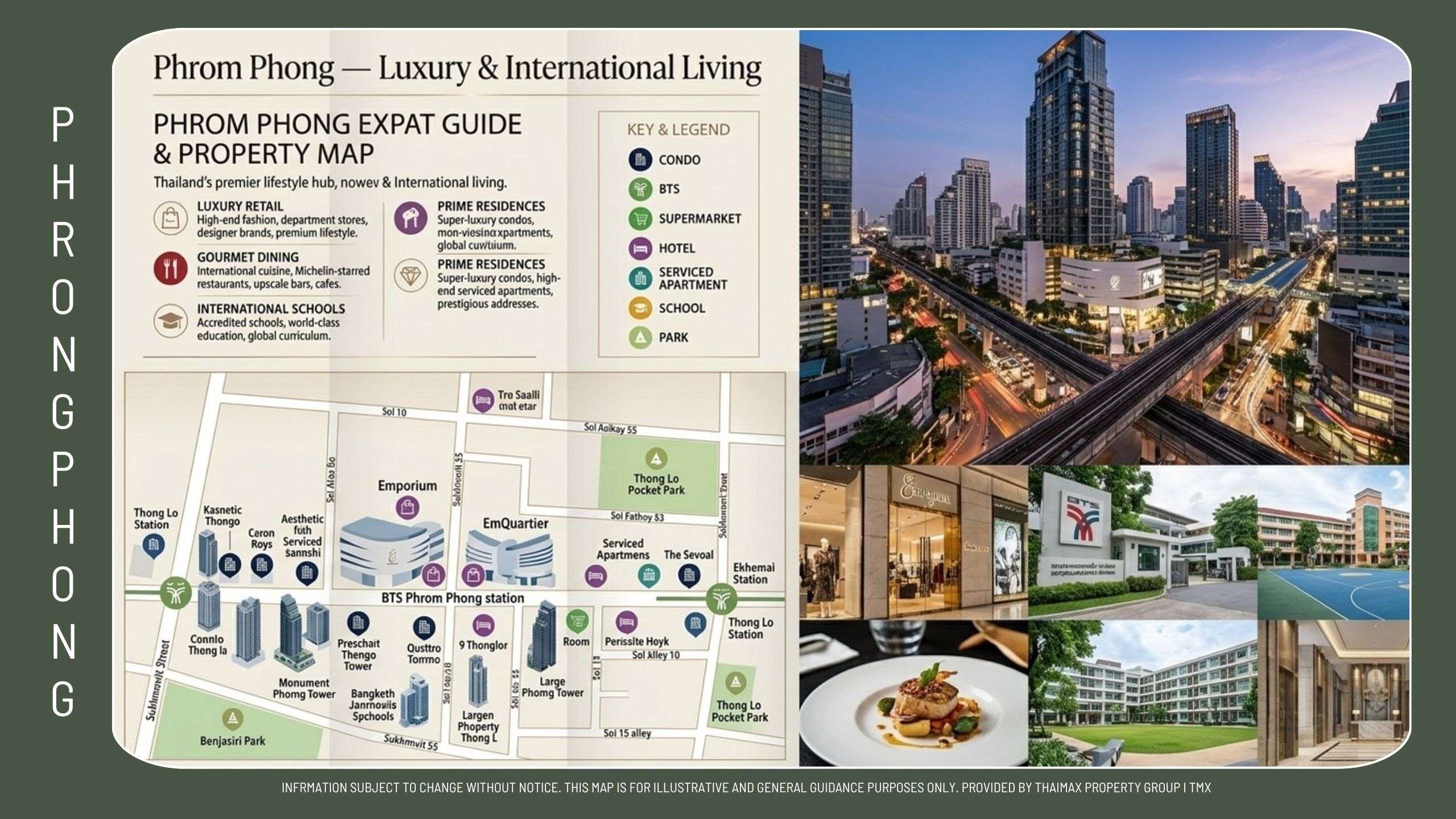
Phrom Phong and Thonglor suit residents looking for international dining, shopping and a sophisticated urban lifestyle.
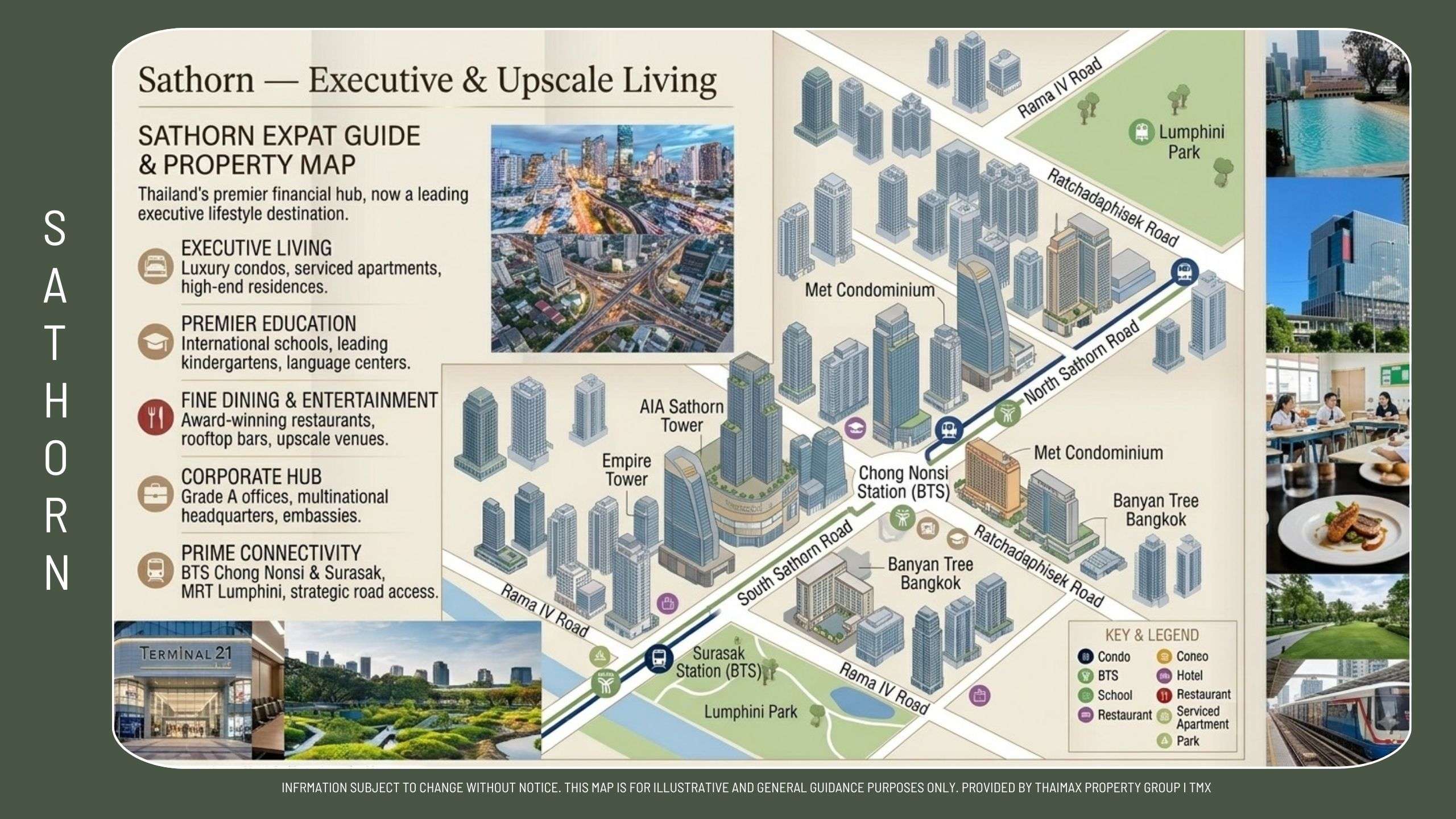
Sathorn and Silom appeal to professionals who want proximity to Bangkok’s CBD.
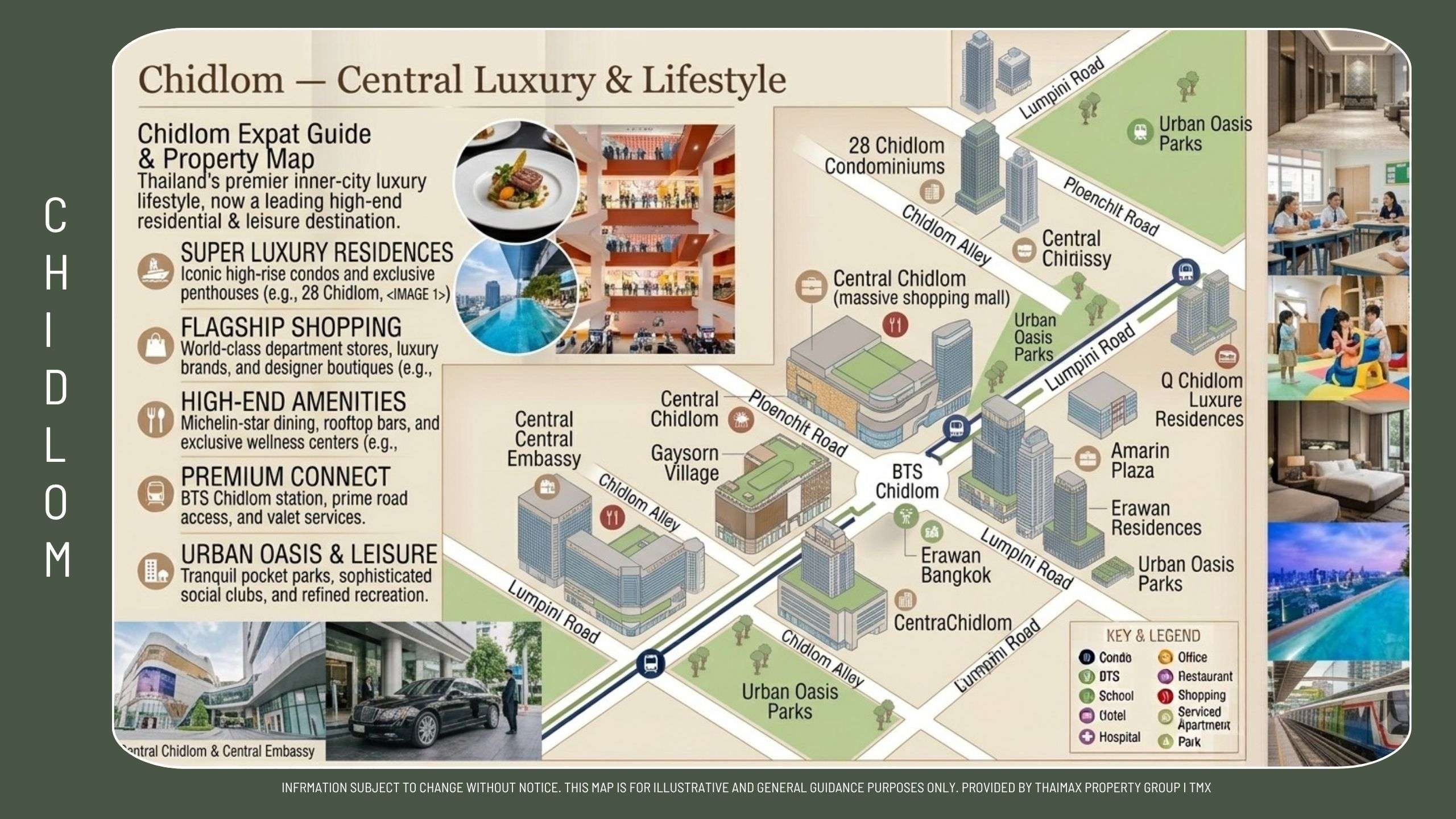
Chidlom and Ploenchit offer prime central living.
Rama 9 and Ratchada provide modern residential options with MRT connectivity.
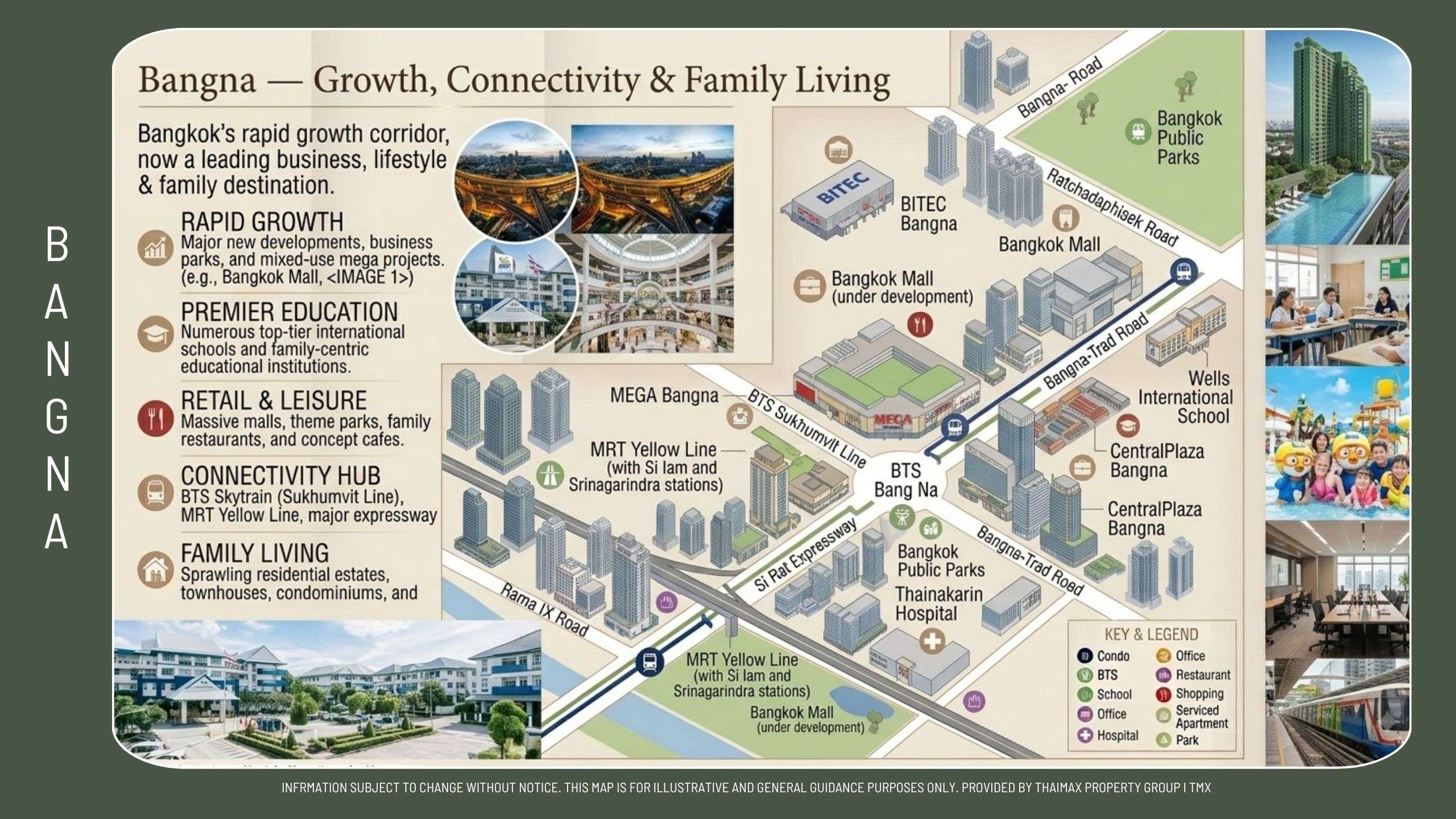
Bangna offers more space and access to schools, retail and eastern Bangkok.
THE RIGHT VISA DEPENDS ON THE LIFE YOU WANT
There is no single “best” Thailand visa.
For a remote professional, the DTV may be relevant.
For a qualifying high-income or highly skilled applicant, the LTR may be more appropriate.
For a retiree, retirement routes may make more sense.
For an employee, a work-related visa is likely to be the starting point.
For eligible professionals and entrepreneurs, Smart Visa may be worth exploring.
For those seeking a lifestyle-focused long-term membership, Thailand Privilege offers another route.
The best visa is the one that fits your actual plans.
PLAN THE MOVE AS ONE DECISION
Moving to Thailand successfully requires more than securing a visa.
It means understanding where you want to live, how you will support yourself, what type of property you need and what your long-term goals are.
Start with your purpose.
Choose the appropriate visa pathway.
Then build your property and lifestyle plans around it.
Because long-term living in Thailand is not simply about staying longer.
It is about creating a life that works.
Visa categories, requirements and eligibility can change, and applications remain subject to approval by the relevant Thai authorities. Always verify current requirements before making immigration, employment or property decisions.
THAIMAX PROPERTY GROUP
Thailand Residential Real Estate | Luxury Property | Buy | Rent | Invest | Relocate

![Illustrated Rama 9 map showing roads, buildings, and zones with a legend and side photos for context (expat guide focus).","Informational map of Rama 9 district highlighting transportation routes, landmarks, and property areas with accompanying images.","Bangkok Rama 9 area map detailing roads, towers, parks, and key districts for expats and readers."]} } Adjust to proper JSON without extra spaces? We must output valid JSON as per format. The content above has extra braces. Let's correct. The required top: {](https://thaimaxproperty.com/wp-content/uploads/2026/08/TMX-rama9-detail-info.jpg)