
Moving to Thailand: Visa, Property & Lifestyle
Moving to Thailand is about much more than finding a beautiful home. For expats and international residents, a successful relocation starts with understanding how you can stay, where you can live, what you can own and how you want your everyday life to look. Thailand offers a wide range of lifestyle options, from the energy of Bangkok to coastal destinations and quieter residential communities, making it important to plan the move around your personal priorities rather than simply choosing a destination.
START WITH YOUR VISA
Your visa should be one of the first things to consider when planning a move to Thailand. Different visa pathways are designed for different purposes, including employment, retirement, family, education, long-term residence and eligible remote-work or lifestyle arrangements.
The key is to choose a visa that matches your actual reason for staying in Thailand. Visa requirements, eligibility and conditions can change, so expats should always verify the current rules with the relevant Thai authorities before making long-term plans.
Your visa determines how you stay. Your lifestyle determines where you stay.
CHOOSE THE RIGHT CITY
Thailand offers very different living experiences depending on where you choose to settle.
Bangkok offers international schools, major hospitals, corporate offices, shopping, dining, entertainment and excellent urban connectivity. Chiang Mai provides a slower pace with a strong international community and access to nature. Coastal destinations offer a more relaxed lifestyle, while areas outside the major city centres can provide more space and privacy.
For professionals and families, Bangkok remains particularly attractive because it combines international connectivity, employment opportunities, healthcare, education and a wide range of residential choices.
RENT FIRST, BUY LATER
For many people relocating to Thailand for the first time, renting before buying can be a practical strategy.
Living in a neighbourhood allows you to experience the actual commute, traffic, noise levels, local amenities and lifestyle before making a long-term property decision.
This is particularly useful in Bangkok, where neighbourhoods can feel completely different even when they are only a few BTS or MRT stations apart.
Experience the neighbourhood before committing to the property.
UNDERSTAND FOREIGN PROPERTY OWNERSHIP
Foreigners can own qualifying condominium units in Thailand, subject to the applicable foreign ownership quota. Under the Condominium Act, foreign ownership in a condominium building is generally limited to 49% of the total condominium area, and the buyer must obtain confirmation of the foreign ownership proportion for the transfer.
Land ownership is subject to significantly greater restrictions for foreigners, so anyone considering a house or villa should obtain professional legal advice and understand the ownership structure before proceeding.
For many international buyers, this makes freehold condominium ownership one of the clearest property options to investigate.
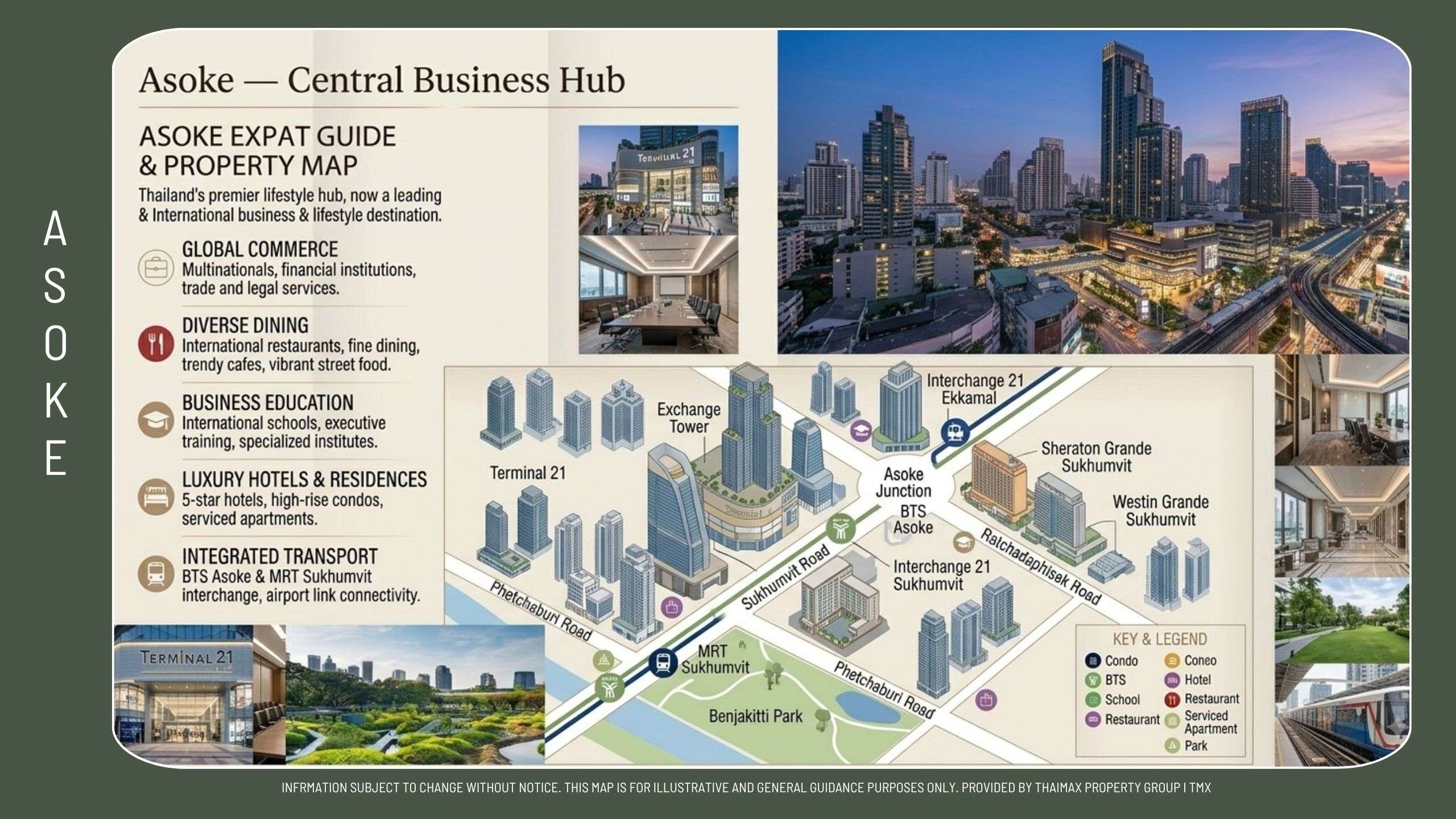
WHERE SHOULD YOU LIVE IN BANGKOK?
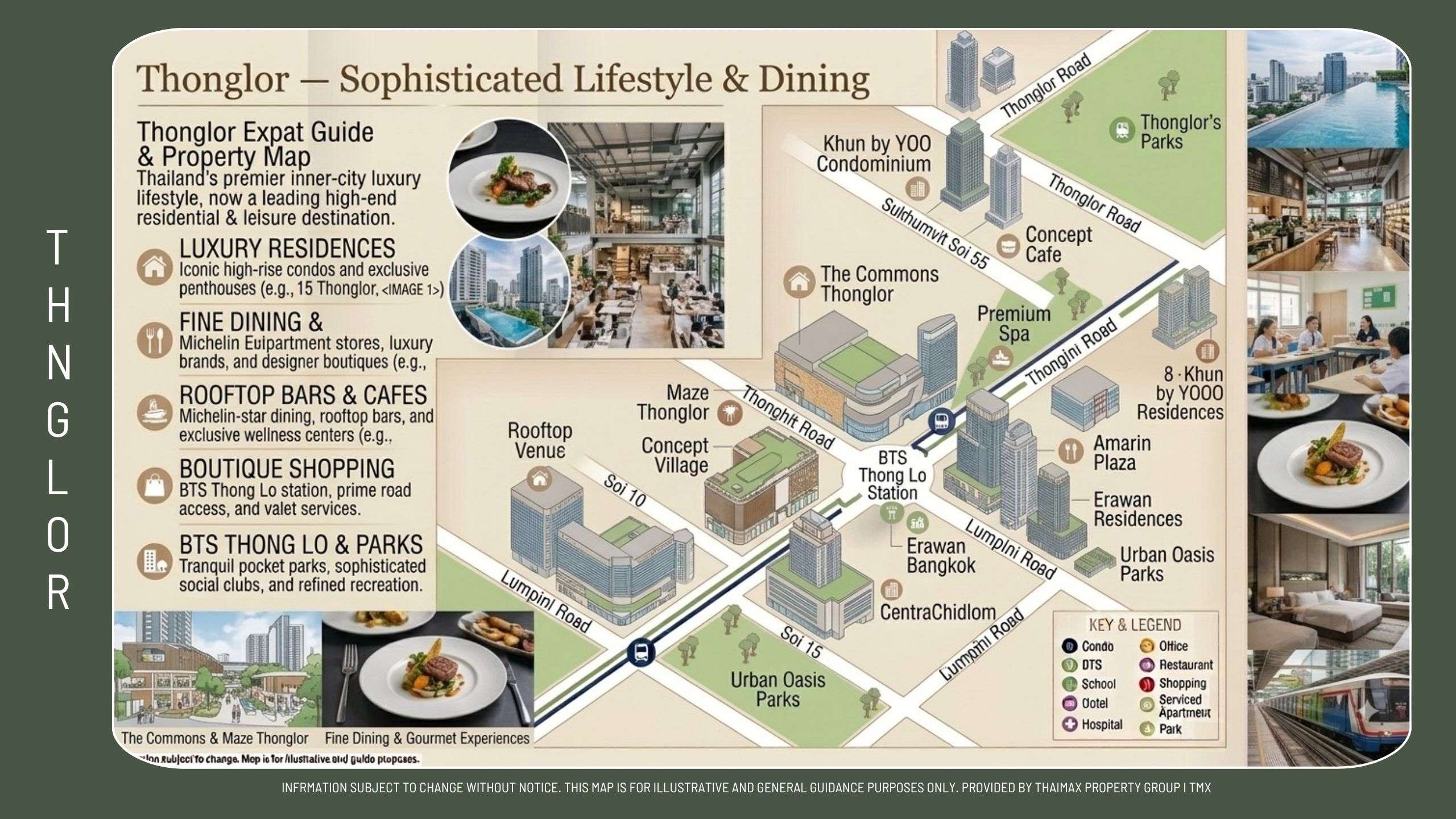
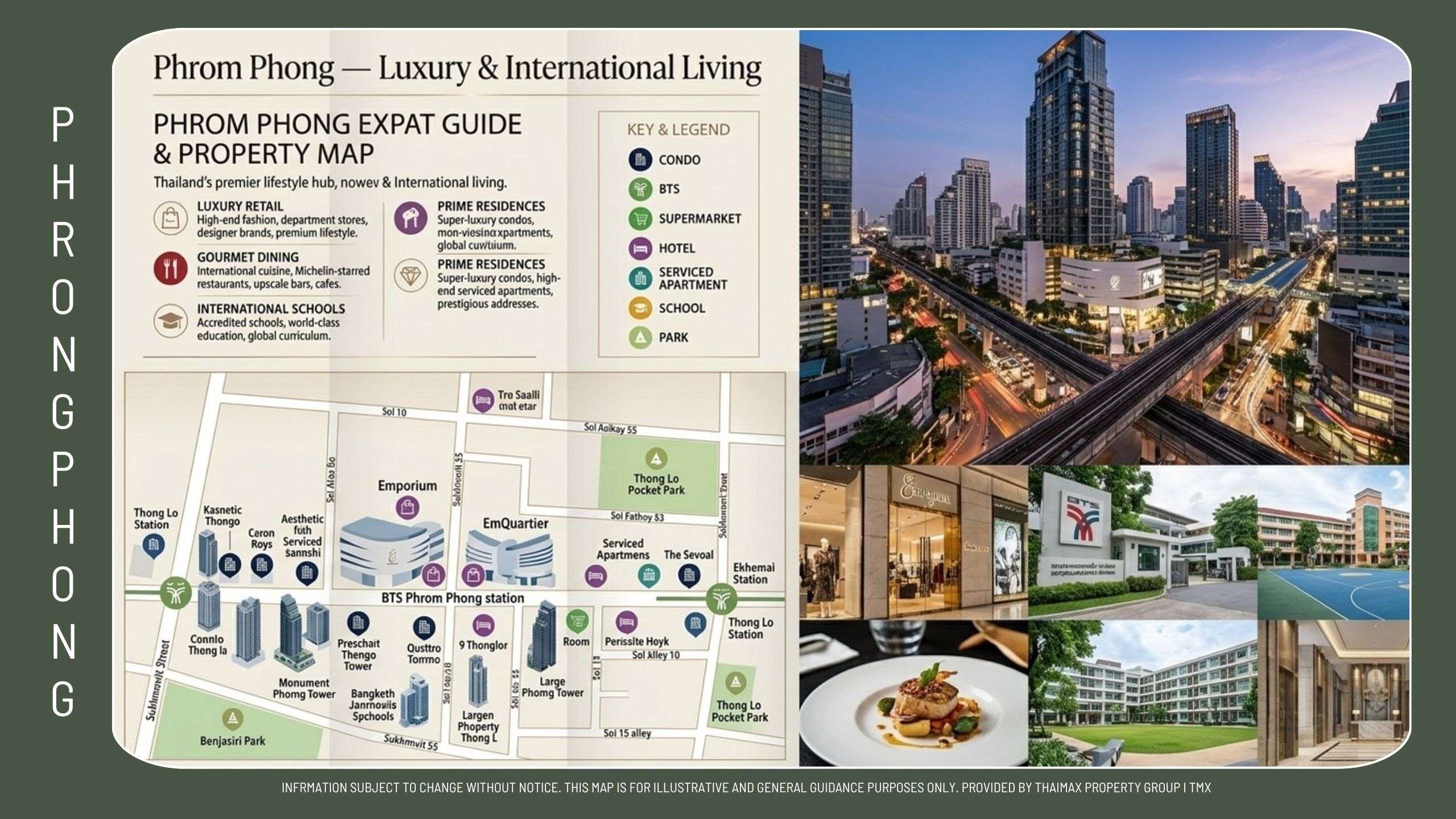
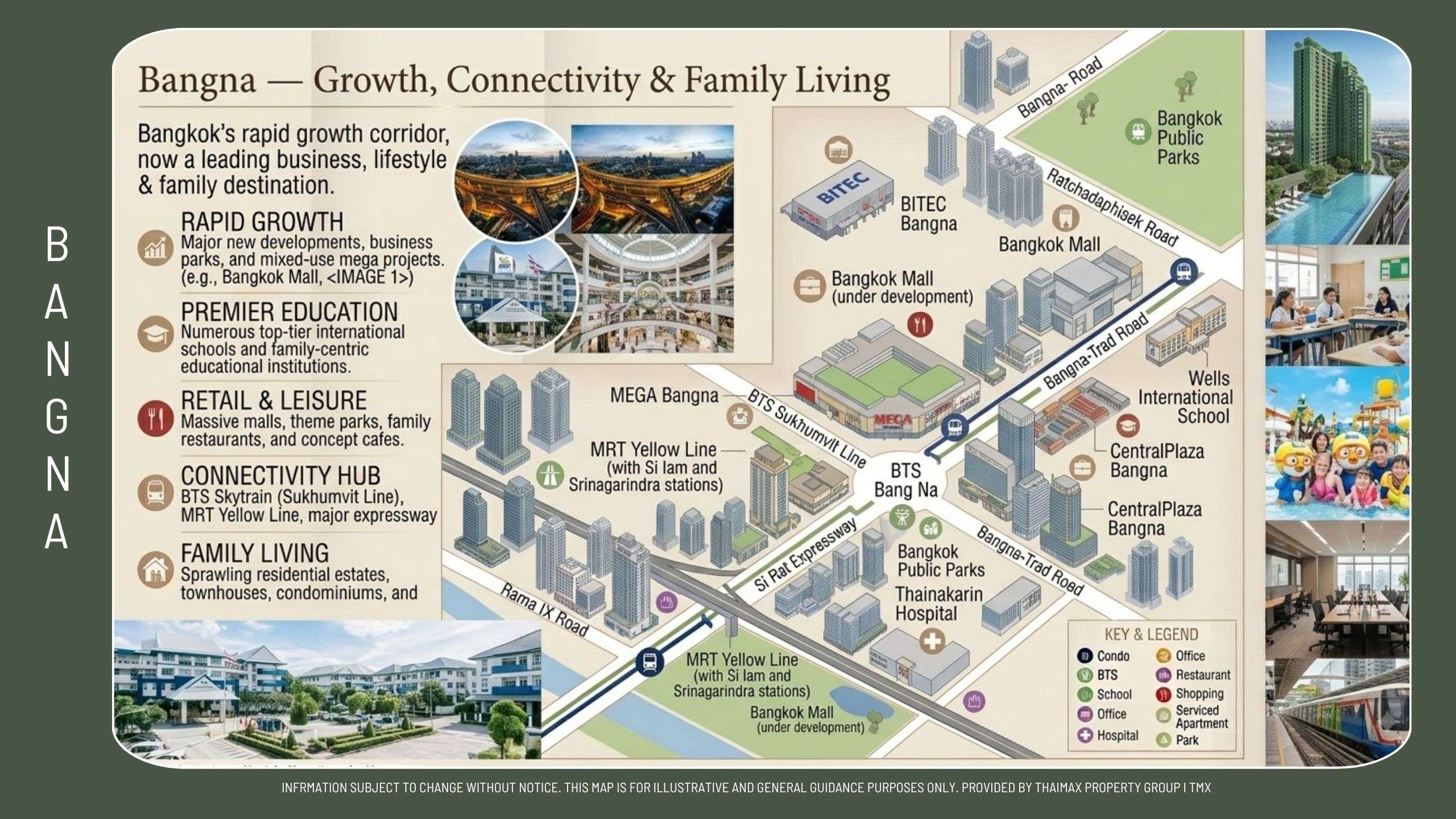
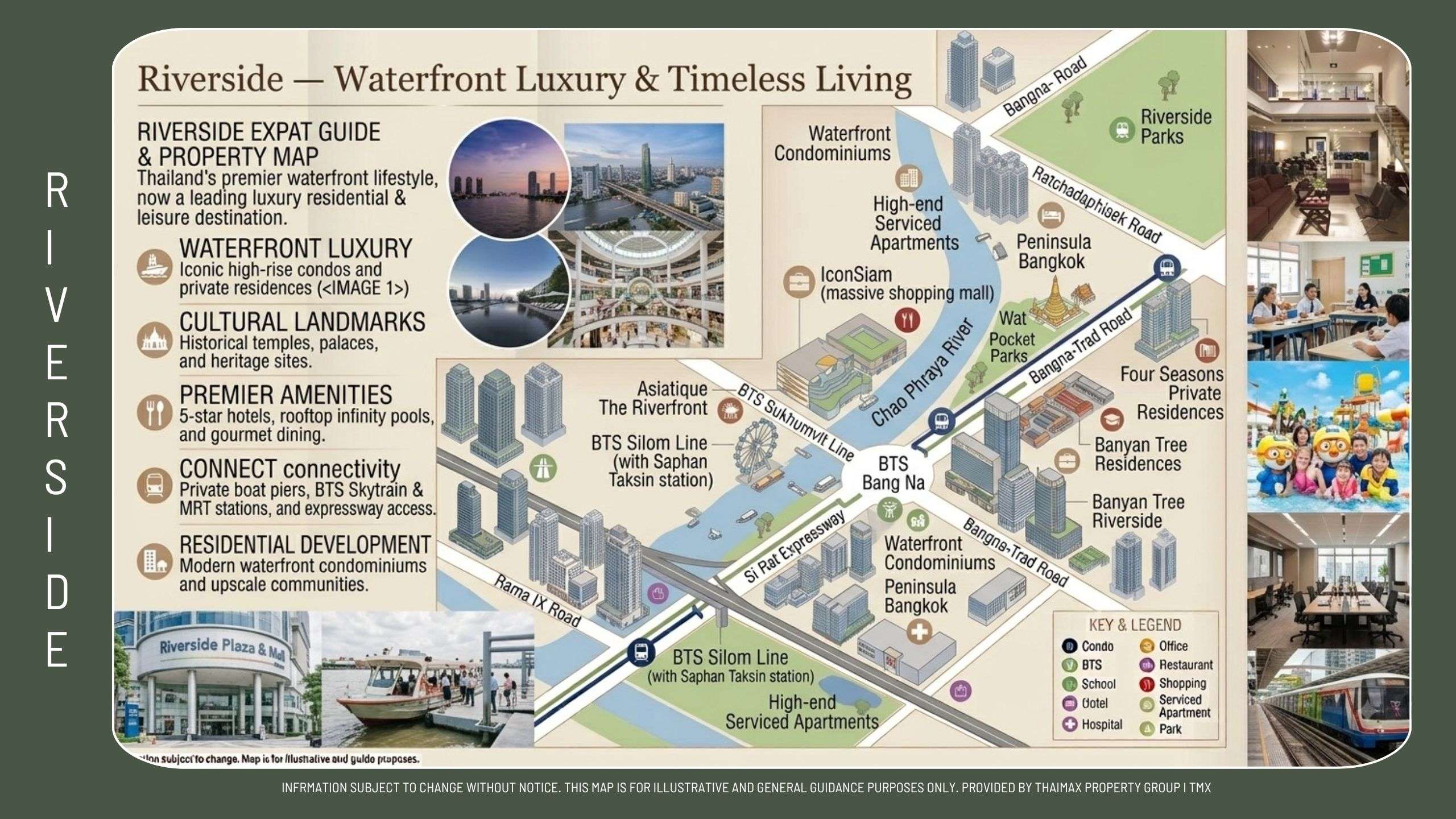
Your neighbourhood should match your lifestyle.
Phrom Phong offers international living, premium shopping and family-friendly convenience.
Thonglor is known for dining, cafés, nightlife and a sophisticated lifestyle.
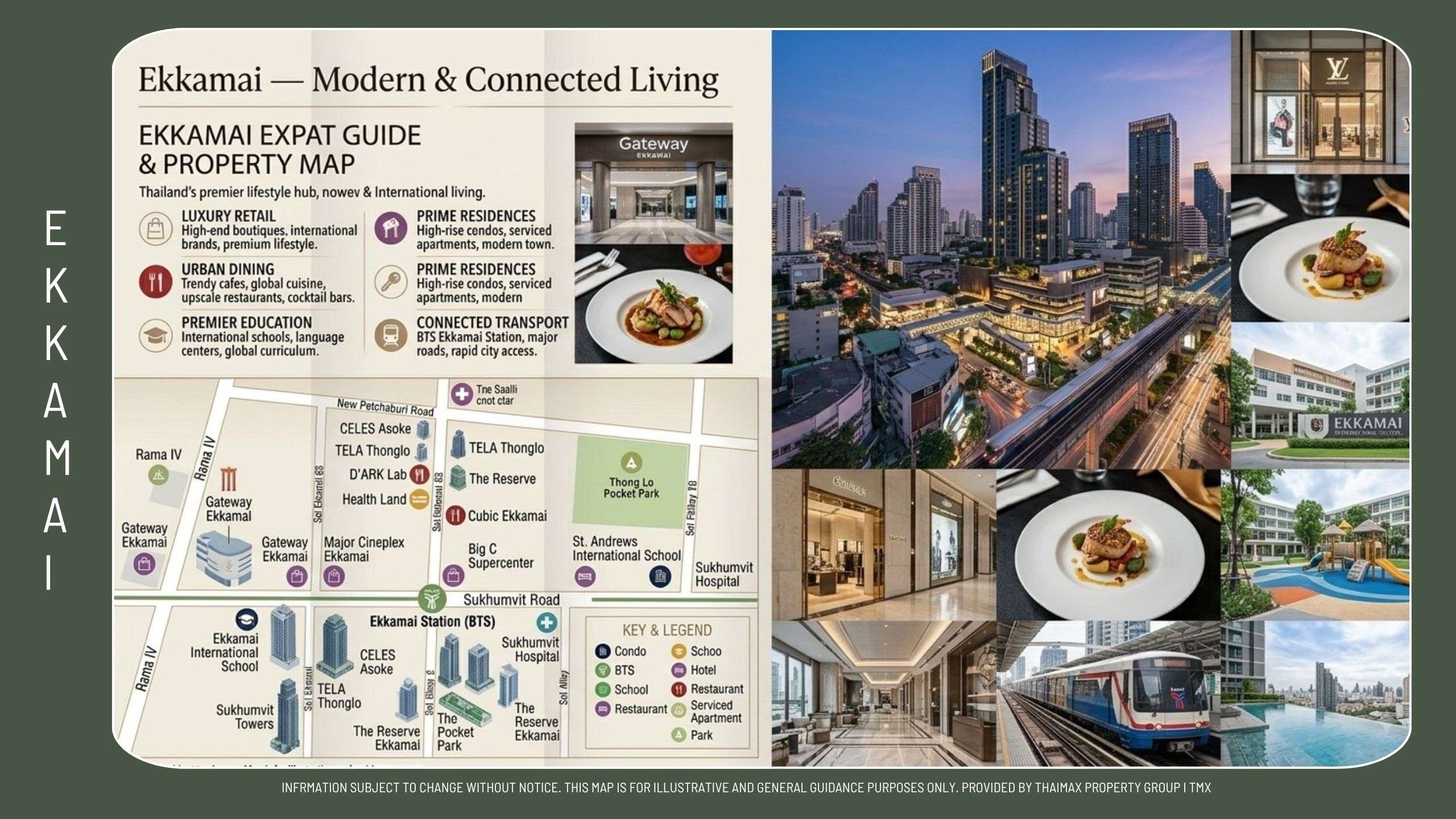
Ekkamai provides a more relaxed residential atmosphere while remaining well connected.
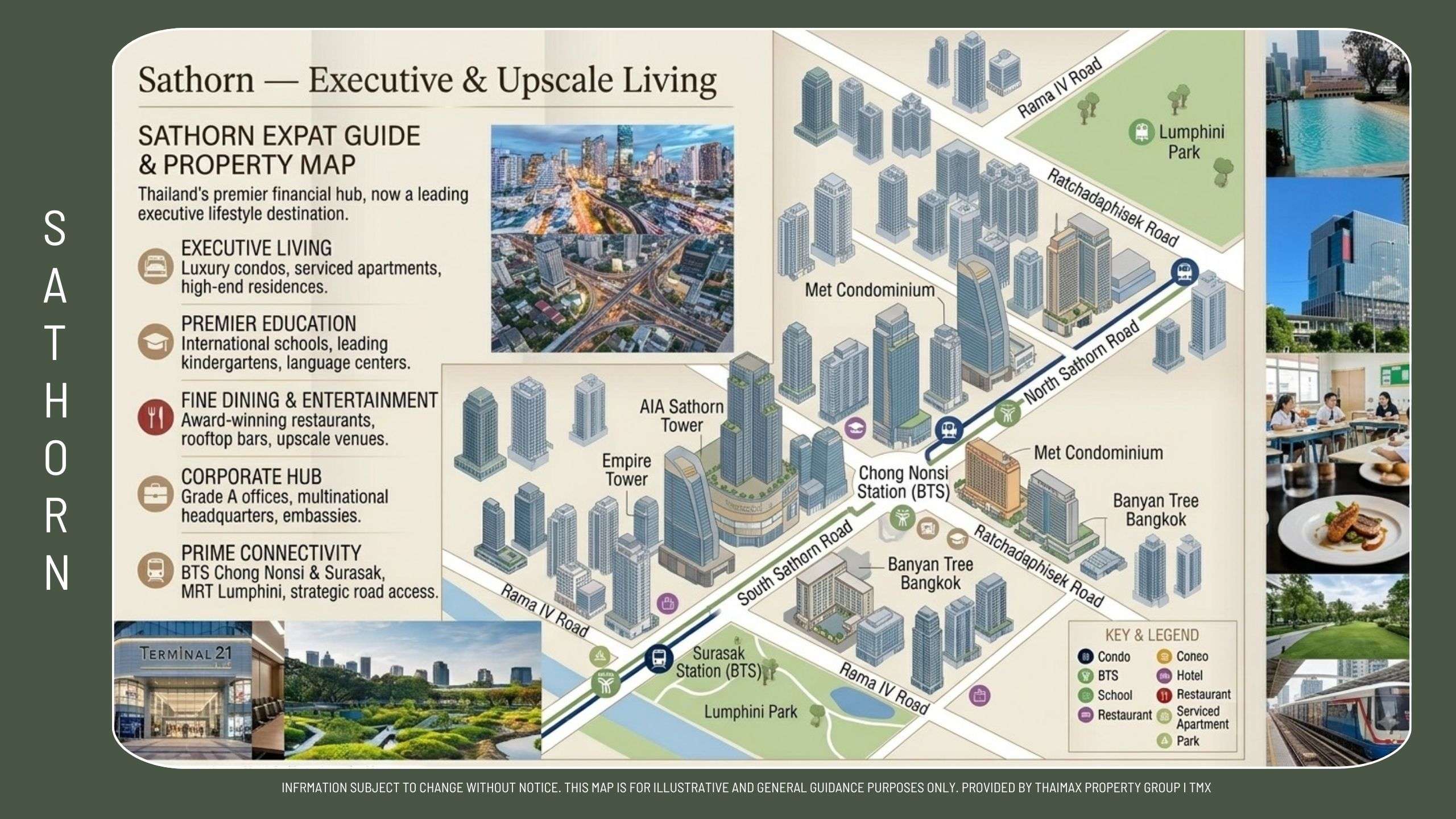
Sathorn and Silom appeal to professionals who want proximity to Bangkok’s CBD.
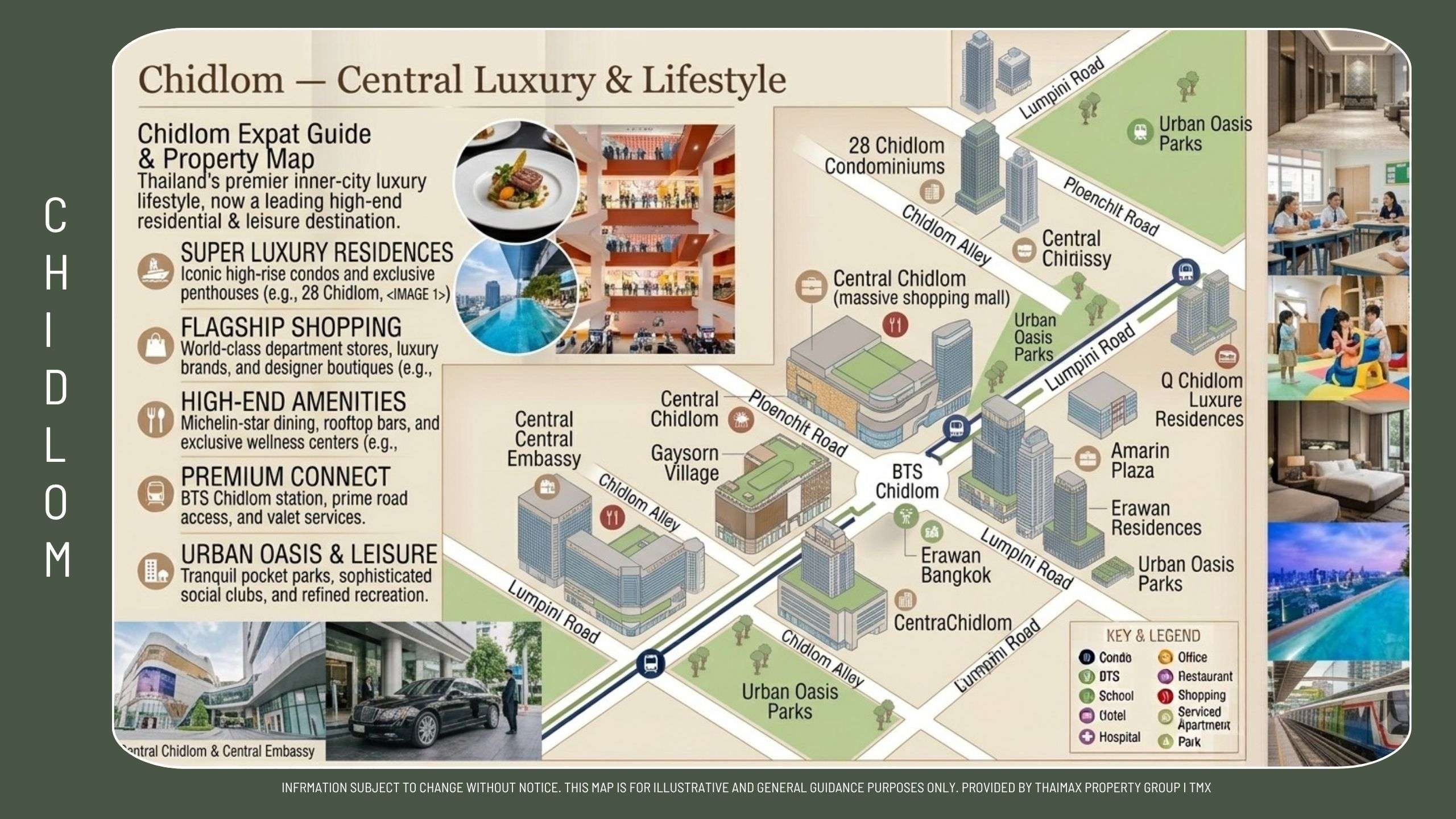
Chidlom and Ploenchit offer prime central living with luxury residences, retail and excellent connectivity.
Rama 9 provides modern developments and MRT connectivity with a different price profile.
Bangna offers more space and access to major retail, schools and eastern Bangkok.
The best neighbourhood is not necessarily the most expensive.
It is the one that fits your everyday life.
THINK ABOUT YOUR DAILY ROUTINE
Before choosing a property, consider how you actually spend your time.
Where will you work?
How often will you use public transport?
Do you need an international school nearby?
Will you need parking?
Do you prefer restaurants and cafés within walking distance?
Do you want a quiet residential environment or an active city lifestyle?
These questions can be more important than the number of bedrooms.
The right home should make everyday life easier.
SCHOOLS & FAMILY LIFE
For families relocating to Thailand, education can become one of the most important factors in choosing a neighbourhood.
Bangkok has a wide selection of international schools, but school location can significantly influence where a family chooses to live because commuting across the city can be time-consuming.
Families should consider the relationship between home, school, work and daily services before selecting a property.
A larger home in the wrong location may ultimately be less convenient than a smaller residence closer to the family’s daily routine.
HEALTHCARE & EVERYDAY CONVENIENCE
Access to quality healthcare is another important consideration for international residents.
Bangkok offers major private hospitals, specialist medical services, pharmacies, supermarkets, shopping centres and a wide range of international restaurants and services.
For long-term residents, proximity to these everyday facilities can become one of the most valuable aspects of a neighbourhood.
Good relocation planning is about convenience, not just accommodation.
BANGKOK LIFESTYLE
One of Bangkok’s biggest advantages is the variety of lifestyles available within one city.
You can live close to luxury shopping and fine dining, choose a quieter residential neighbourhood, stay near major business districts or find a home surrounded by cafés, parks and local communities.
The city also offers an extensive BTS and MRT network, making it possible to build a lifestyle around public transportation rather than depending entirely on a car.
This flexibility is one reason Bangkok continues to appeal to international residents.
THE COST OF LIVING IS ONLY PART OF THE EQUATION
Thailand can offer attractive value compared with many major international cities, but the cost of living varies considerably depending on lifestyle.
Housing, international education, private healthcare, dining, transportation and entertainment can all change the monthly budget significantly.
Rather than asking whether Thailand is “cheap,” it is more useful to ask:
What lifestyle can your budget comfortably support?
PLAN YOUR PROPERTY AROUND YOUR FUTURE
If you intend to stay in Thailand for several years, your property requirements may change.
A single professional may need a well-connected one-bedroom apartment. A growing family may eventually require more bedrooms, schools, parking and larger living spaces.
Investors may have completely different priorities, focusing on rental demand, liquidity, location and long-term value.
Your property should therefore support not only your current lifestyle but also your expected future plans.
THE RELOCATION PERSPECTIVE
Moving to Thailand is not one decision.
It is a series of decisions that work together.
Visa — How will you legally stay?
Location — Where do you want to build your life?
Property — Should you rent or buy?
Lifestyle — What do you want your everyday life to look like?
Budget — What level of living can you comfortably maintain?
Future — How long do you expect to stay?
When these elements are aligned, relocation becomes much easier.
A NEW LIFE IN THAILAND
Thailand offers international residents the opportunity to combine career, lifestyle, property and long-term living in one destination.
For some, that means a luxury condominium in central Bangkok. For others, it may mean a family home near an international school or a quieter residence outside the city.
There is no single definition of living well in Thailand.
The best home is the one that fits the life you want to build.
THAIMAX PROPERTY GROUP
Thailand Residential Real Estate | Luxury Property | Buy | Rent | Invest | Relocate

![Illustrated Rama 9 map showing roads, buildings, and zones with a legend and side photos for context (expat guide focus).","Informational map of Rama 9 district highlighting transportation routes, landmarks, and property areas with accompanying images.","Bangkok Rama 9 area map detailing roads, towers, parks, and key districts for expats and readers."]} } Adjust to proper JSON without extra spaces? We must output valid JSON as per format. The content above has extra braces. Let's correct. The required top: {](https://thaimaxproperty.com/wp-content/uploads/2026/08/TMX-rama9-detail-info.jpg)