
Rental Yield vs Capital Growth: Which Strategy Wins?
Property investment is often divided into two strategies: rental yield and capital growth.
One focuses on generating income today. The other focuses on increasing the value of the property over time.
In Bangkok, however, the decision is rarely as simple as choosing one over the other. Different neighbourhoods, property types and price points can produce very different results. Current market data shows Bangkok condominium yields commonly sitting in the mid-single digits on a gross basis, with net returns lower after costs.
The real question is not simply which strategy wins.
It is which strategy fits your investment objective.
RENTAL YIELD — INCOME TODAY
Rental yield measures how much rental income a property generates relative to its purchase price.
For investors focused on cash flow, a property with a strong rental yield can provide regular income while allowing the investor to hold the underlying asset.
In Bangkok, higher-yield opportunities are often found in locations where purchase prices remain relatively accessible while rental demand is supported by BTS or MRT connectivity, employment centres, universities and established residential communities.
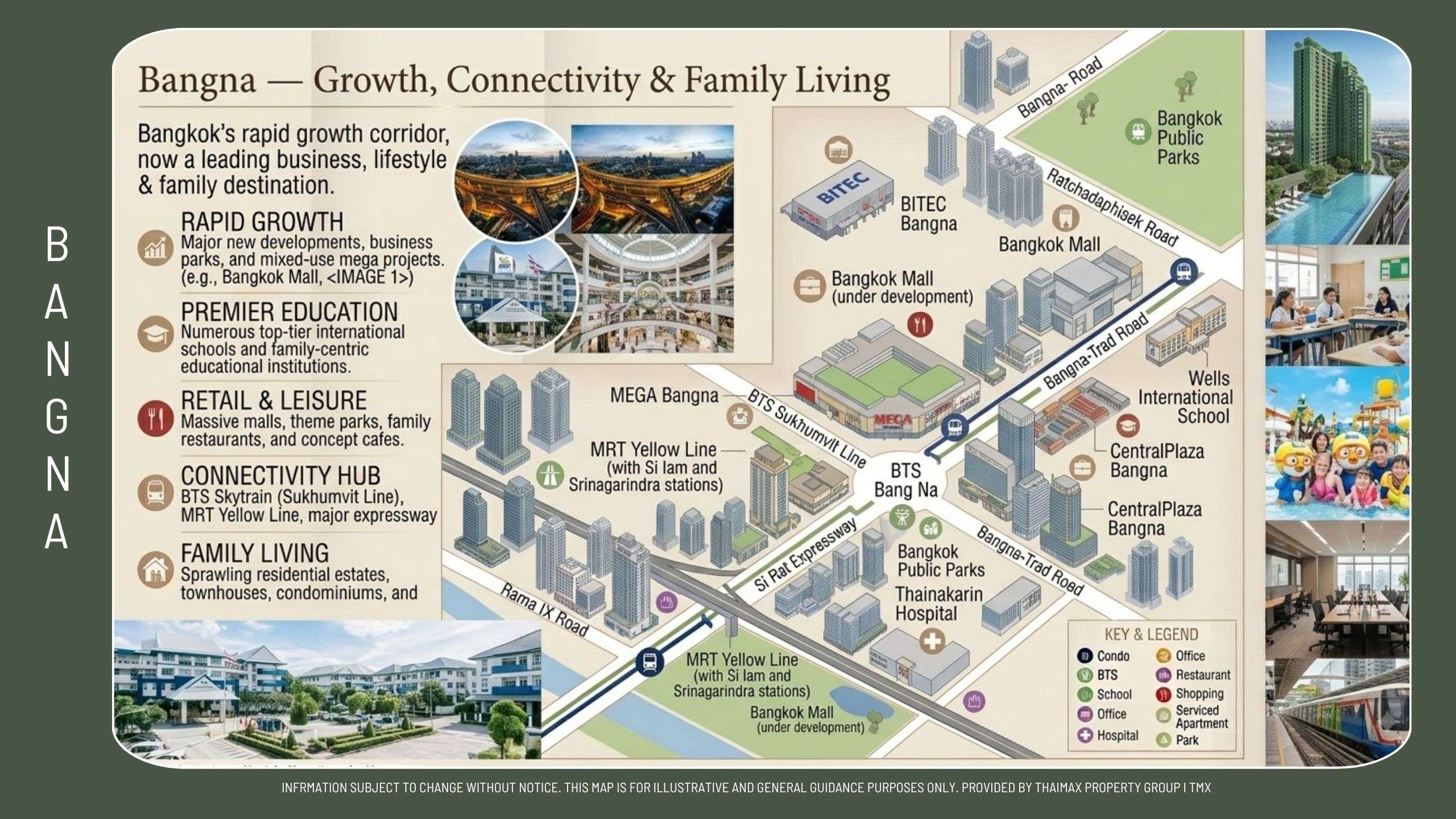
Areas such as On Nut, Bangna, Rama 9 and parts of Ratchada can offer a different yield profile from Bangkok’s most expensive luxury districts.
The objective is simple: make the property work for you while you own it.
CAPITAL GROWTH — VALUE OVER TIME
Capital growth focuses on the increase in a property’s market value.
Rather than maximising rental income, investors may prioritise prime location, scarcity, building quality, infrastructure, neighbourhood desirability and long-term demand.
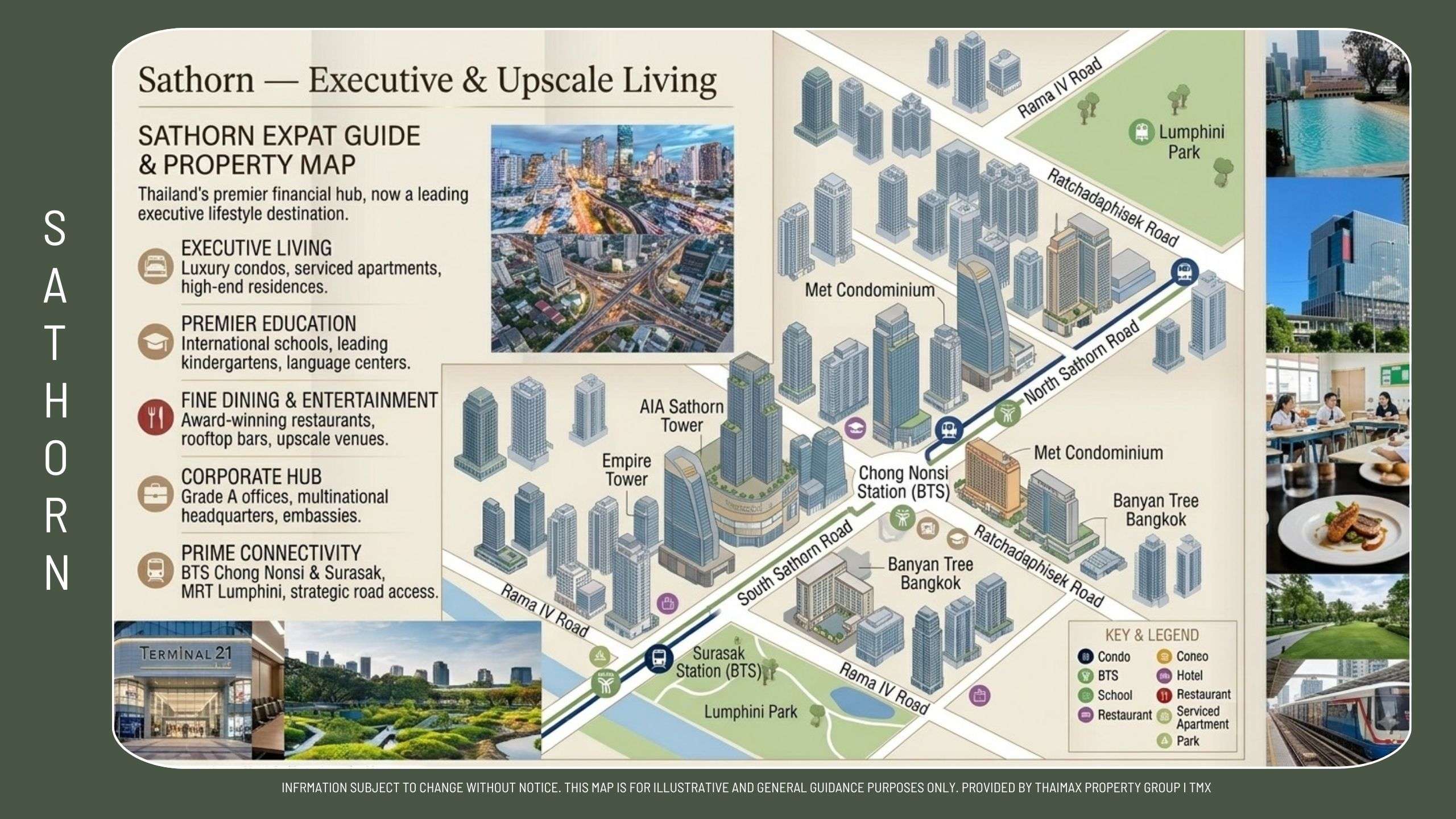
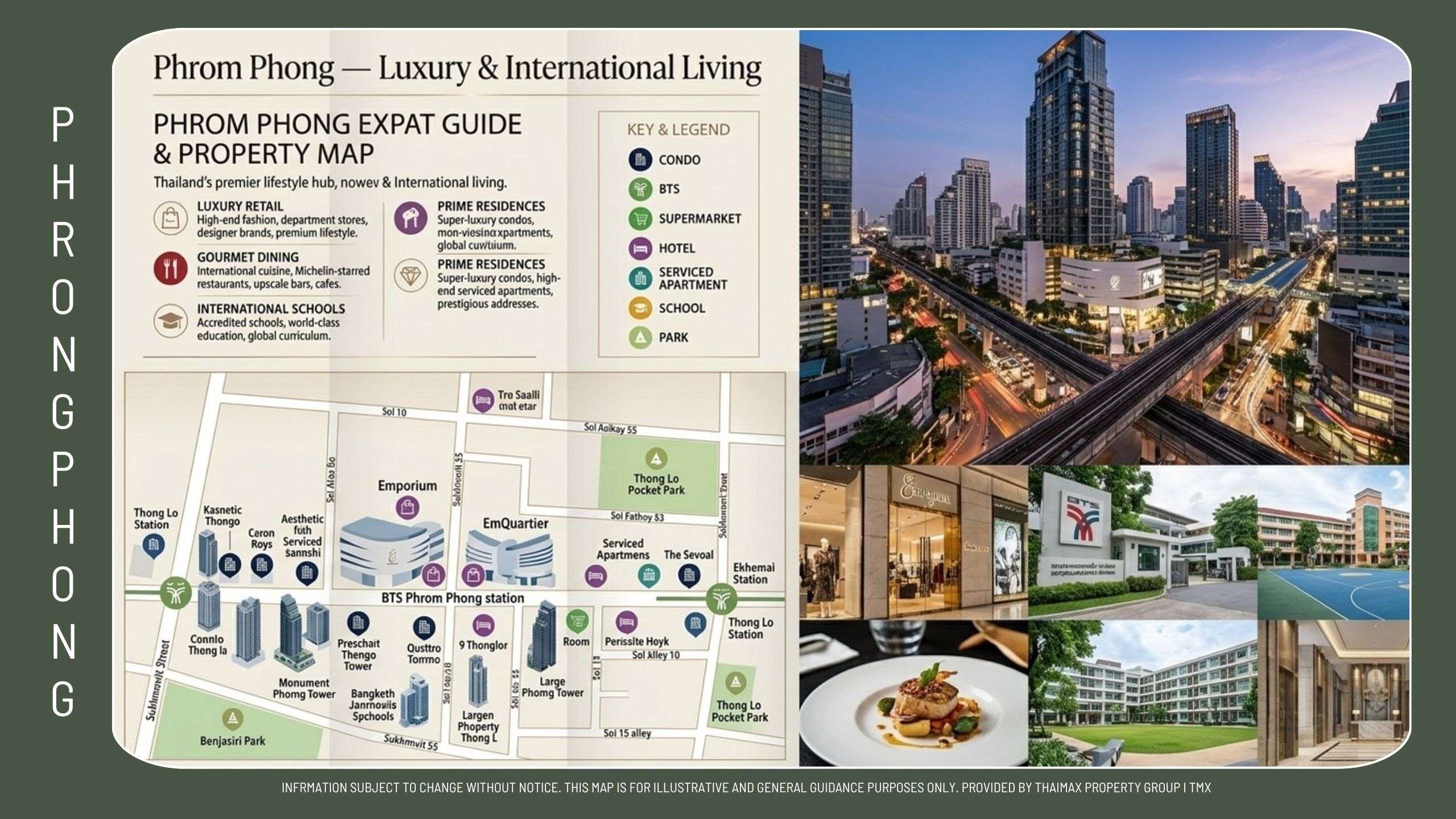
Prime areas such as Phrom Phong, Thonglor, Chidlom, Ploenchit, Sathorn and Silom can command higher purchase prices, which may reduce rental yield, but they can offer strong advantages in terms of location, tenant profile and resale appeal.
This creates an important distinction:
The property with the highest yield is not necessarily the property with the strongest long-term value.
HIGH YIELD DOES NOT ALWAYS MEAN BETTER
A high rental yield can look attractive on paper.
But investors need to look at what is behind the number.
A property may offer a higher yield because the purchase price is low, but there may also be greater vacancy risk, weaker resale demand, older building quality or a smaller pool of potential tenants.
By contrast, a prime property may generate a lower yield but benefit from stronger demand and greater liquidity.
Yield tells you what the property earns.
Location helps determine what the property may become.
PRIME PROPERTY — LOWER YIELD, STRONGER POSITION
Luxury condominiums in central Bangkok often sit at the higher end of the price spectrum.
Because purchase prices are high relative to achievable rents, gross rental yields can be lower than those available in more affordable locations.
But prime properties can offer other advantages.
They may attract international tenants, executives and high-income households. They may also benefit from limited supply, prestigious addresses, strong infrastructure and established lifestyle amenities.
For an investor focused on wealth preservation and long-term positioning, these factors can be more important than achieving the highest possible rental yield.
THE LOCATION MAKES THE DIFFERENCE
Bangkok’s investment market is highly location-sensitive.
A condominium close to BTS or MRT, surrounded by restaurants, shopping, offices and essential services can have a much deeper rental market than a similar property with weaker connectivity.
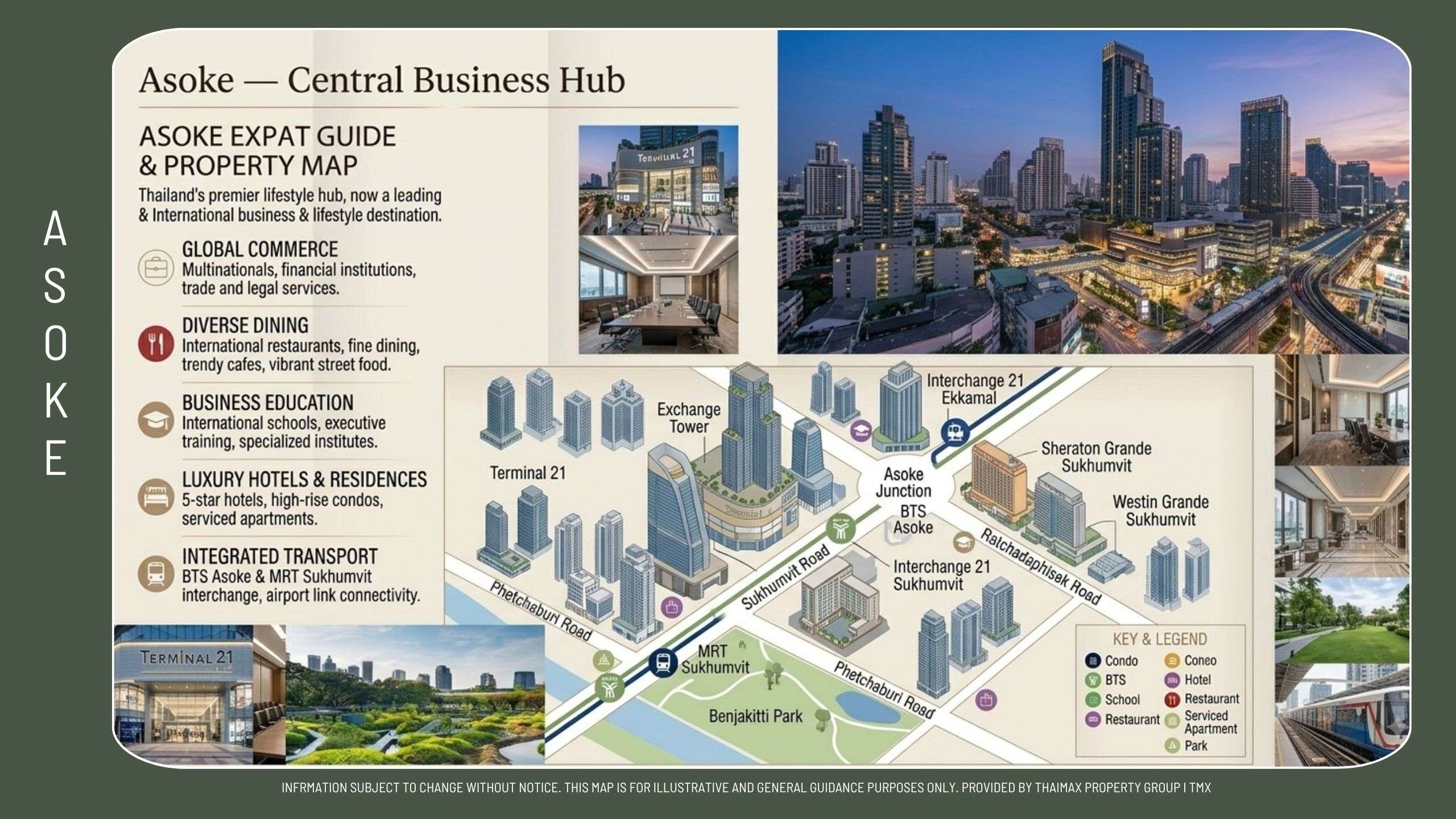
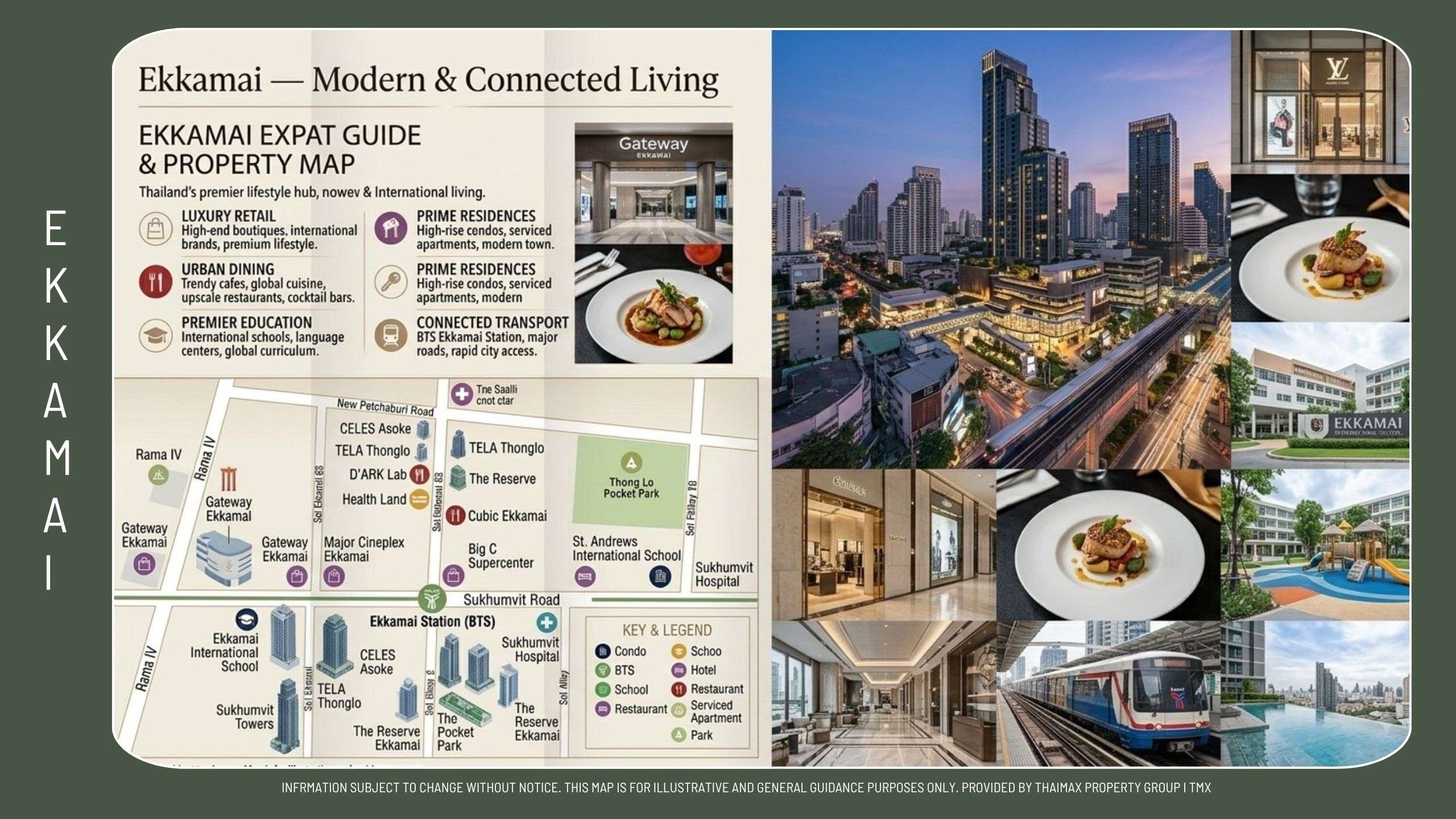
This is why areas such as Sukhumvit, Sathorn, Silom, Rama 9, Ratchada and Bangna can attract different types of investors.
The key is understanding what drives demand in each location.
Buy where people want to live, not simply where property looks affordable.
RENTAL YIELD INVESTORS
Investors prioritising rental income will typically focus on properties that combine reasonable purchase prices, strong tenant demand and manageable operating costs.
Smaller units can often produce stronger yields because the purchase price is lower relative to achievable rent, while properties close to public transport can benefit from a broader tenant pool.
For this strategy, the numbers matter.
Purchase price.
Monthly rent.
Vacancy.
Management fees.
Common-area fees.
Maintenance.
Taxes.
The real return is the net yield, not the headline yield.
CAPITAL GROWTH INVESTORS
Capital-growth investors may be more willing to accept a lower initial rental return in exchange for a stronger long-term location.
They may prioritise established neighbourhoods, scarce land, high-quality developments, premium views, reputable buildings and strong resale demand.
The strategy is less about maximising monthly income and more about owning an asset that remains desirable over time.
The goal is to buy quality before the market fully prices it in.
THE HYBRID STRATEGY
For many investors, the strongest approach is not choosing between yield and growth.
It is combining both.
A well-selected Bangkok property can provide rental income while also offering the potential for long-term appreciation.
This is particularly relevant in areas where infrastructure, connectivity and neighbourhood development continue to improve.
A property producing a reasonable net yield today may become even more attractive if rental demand strengthens and the surrounding area becomes more desirable.
Income provides stability. Growth creates upside.
WHAT SHOULD YOU CHOOSE?
If your priority is monthly income, rental yield should receive greater weight.
If your priority is long-term wealth creation, capital growth may be more important.
If you want a balance between income and appreciation, the best strategy may be to target a well-located property where both rental demand and long-term desirability are strong.
The right answer also depends on your investment horizon.
A short- to medium-term investor may care more about liquidity and current income, while a long-term investor may be more comfortable accepting a lower initial yield for a stronger asset.
THE SMART MONEY LOOKS AT TOTAL RETURN
The most useful way to evaluate a property is to consider its total return.
That means looking at rental income together with potential capital appreciation, while accounting for all costs.
A property producing a 6% gross yield is not automatically better than one producing 4%.
If the first property has higher vacancy, greater maintenance costs and weaker resale demand, the difference can quickly narrow.
Likewise, a lower-yielding prime property may deliver a stronger overall result if its value and rental demand remain resilient.
The best investment is the one that performs well across the entire ownership cycle.
THE INVESTMENT PERSPECTIVE
Rental yield and capital growth are not competing ideas.
They are two different ways of measuring property performance.
Rental Yield — income today.
Capital Growth — value tomorrow.
Total Return — the combination of both.
For Bangkok investors, the strongest opportunity may therefore be found in properties that offer a sensible balance between purchase price, rental demand, location quality, liquidity and long-term potential.
The smartest question is not:
“Which strategy wins?”
It is:
“Which property gives me the right balance of income, growth and risk?”
THAIMAX PROPERTY GROUP
Bangkok Residential Real Estate | Luxury Property | Buy | Rent | Invest | Relocate

![Illustrated Rama 9 map showing roads, buildings, and zones with a legend and side photos for context (expat guide focus).","Informational map of Rama 9 district highlighting transportation routes, landmarks, and property areas with accompanying images.","Bangkok Rama 9 area map detailing roads, towers, parks, and key districts for expats and readers."]} } Adjust to proper JSON without extra spaces? We must output valid JSON as per format. The content above has extra braces. Let's correct. The required top: {](https://thaimaxproperty.com/wp-content/uploads/2026/08/TMX-rama9-detail-info.jpg)